
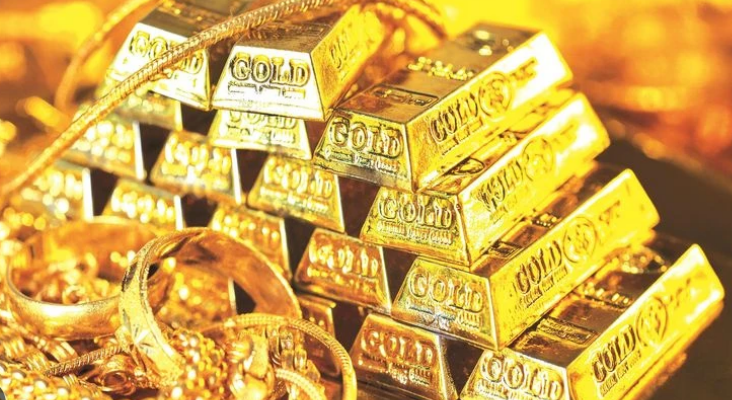

October 17, 2025 | Mumbai / New Delhi — In a striking development for India’s external assets, the Reserve Bank of India (RBI) announced that the nation’s gold reserves have now surpassed $100 billion, reaching $102.365 billion as of October 10, 2025.
This milestone is significant not only for the headline number but also because of what it signals about global asset allocation, reserve management, and central bank behavior in the current environment.
The Numbers Behind the Surge
- Gold’s Share in Reserves
Gold now constitutes 14.7% of India’s forex reserves—the highest proportion since 1996–97. - Total Forex Reserves
Although gold has surged in value, India’s overall foreign exchange reserves have slightly declined, by $2.18 billion, to $697.78 billion. - Gold Price Gains
The underlying driver has been a strong global rally in gold, with prices rising nearly 65% year-to-date, fueled by geopolitical risks, global central banks diversifying reserves, and the search for safe-haven assets. - Pace of New Acquisitions
Interestingly, India’s own gold purchases have slowed in 2025: only 4 tons were added from January to September, compared with 50 tons during the same period in 2024. The jump in value, then, has been more on valuation gains than heavy stacking.
Why This Matters
1. Diversification Strategy at Play
Central banks globally are rethinking the composition of their reserves. The higher gold share underlines a tilt away from traditional currency-based reserves (e.g. U.S. dollar) toward real-asset hedges, especially under uncertainty.
2. Hedging Against Currency and Credit Risks
Gold offers a non-sovereign-backed asset buffer against currency volatility, default risk, or sanctions-related pressures — especially in an era of rising macro-geopolitical anxiety.
3. Valuation Gains vs. Active Accumulation
While many observers may see the $100 billion figure as a victory of active reserve strategy, the reality is more nuanced: most of the increase reflects market revaluation rather than new accumulation. That matters for how sustainable or replicable this figure may be.
4. Psychological & Symbolic Significance
Crossing the $100 billion threshold gains symbolic weight—signaling strength in the RBI’s reserve posture amid external headwinds (e.g. dollar stress, trade tensions).
5. Pressure on FX Reserves
The modest decline in overall reserves shows that swings in other components (foreign currencies, securities) remain volatile. A heavy tilt to gold could reduce flexibility for currency interventions.
Risks & Caveats
- Gold Volatility: Gold is not a perfect hedge. Sharp corrections can erode gains quickly.
- Liquidity Constraints: Gold is less liquid than many sovereign bonds or FX instruments; using it in crisis may have higher frictions.
- Valuation Illusion: A rising gold value inflates the reserve number, but does not always translate into usable breathing room.
- Currency mismatches: Over-reliance on gold doesn’t help settle foreign obligations denominated in dollars or other currencies.
What Comes Next: Watch Measurables
- Further Accumulation Moves
Will RBI resume more aggressive gold buying, or keep accumulation modest and rely on valuation gains? - FX Intervention Behavior
With reserves showing a dip, how actively will RBI intervene in currency markets? (Already, the RBI is selling dollars pre-market to stabilize the rupee.) Reuters+1 - Breakdown of Reserve Composition
More granular data on how much is held in U.S. treasuries, sovereign bonds, foreign equities vs. real assets like gold. - Global Central Bank Trends
Are other reserve-holding nations (especially in emerging markets) following similar gold-heavy portfolio tilts? - Macro Shocks
A sharp dollar rally, crises in global credit markets, or sovereign stress events could test the strength of a gold-heavy reserve mix.

Comments are closed.