
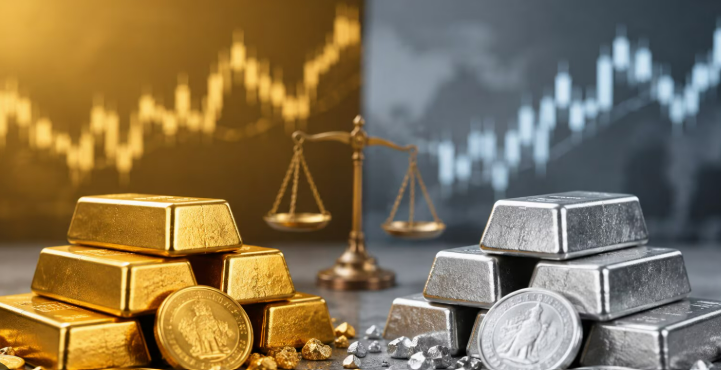
Gold and Silver Prices Surge as Investors Turn to Precious Metals Amid Global Uncertainty

Gold and silver prices have once again moved higher in India, highlighting the continued strength and volatility of the precious-metals market. On August 20, 2026, domestic bullion markets recorded renewed gains, with MCX gold trading above ₹1.58 lakh per 10 grams and silver futures also advancing sharply. The latest movement comes after a highly volatile period in which precious metals have responded to changing expectations around U.S. interest rates, bond yields, currency movements, geopolitical tensions and investor demand for safe-haven assets.
The rise in gold has been particularly significant because investors are closely watching the direction of global monetary policy. Gold does not generate interest income, so falling bond yields generally make it more attractive relative to fixed-income assets. Recent weakness in U.S. Treasury yields and a softer dollar provided additional support to bullion, encouraging investors to increase exposure to gold. According to market reports, gold recently climbed sharply before experiencing some profit-taking, demonstrating how quickly sentiment can change in the current environment.
Silver has also attracted considerable attention. Unlike gold, silver has both investment and industrial demand, making its price particularly sensitive to developments in manufacturing, electronics, renewable-energy technologies and other industrial applications. Strong investment interest combined with supply concerns has contributed to silver’s broader rally this year, although the metal remains considerably more volatile than gold. Market analysts continue to monitor physical-market tightness and the balance between industrial consumption and available supply.
Global Uncertainty Supports Safe-Haven Demand
One of the major factors influencing precious-metal prices is geopolitical uncertainty. Tensions involving the United States, Iran and the wider Middle East have contributed to fluctuations across energy, currency and financial markets. When investors become concerned about geopolitical or economic instability, gold often benefits from its traditional role as a store of value. Recent market analysis indicates that gold recovered strongly in August after suffering a substantial decline earlier in the year, suggesting that some investors are rebuilding defensive positions.
However, geopolitical uncertainty can also create sudden corrections. Rising oil prices can increase inflation expectations, potentially encouraging central banks to maintain or increase interest rates. Higher interest rates and bond yields can reduce the attractiveness of non-yielding assets such as gold. This relationship has been visible in recent trading sessions, when higher yields and concerns about monetary tightening temporarily pressured precious metals.
U.S. Federal Reserve Remains a Key Market Driver
Investors are also paying close attention to the U.S. Federal Reserve. Expectations surrounding future interest-rate decisions can cause significant movements in gold and silver because changes in interest rates influence bond yields, the U.S. dollar and the opportunity cost of holding precious metals.
The latest Federal Reserve signals have created a complicated backdrop. While some market participants continue to expect relatively supportive monetary conditions, policymakers have also expressed concerns about inflation. The combination of energy-price pressures and global uncertainty means that investors are attempting to determine whether the Fed will maintain its current stance or adopt a more restrictive approach later in the year.
The market reaction has been visible in gold prices. Gold recently moved sharply higher after Treasury-related developments pushed bond yields lower and weakened the dollar, before retreating as investors booked profits and concerns over inflation and interest rates resurfaced.
Indian Bullion Market Feels the Global Impact
India remains one of the world’s major gold-consuming markets, meaning international price movements quickly influence domestic bullion rates. Local prices are affected not only by international gold and silver prices but also by the rupee-dollar exchange rate, import costs, taxes, domestic demand and market premiums.
On August 20, reports indicated that gold prices were rising across major Indian cities, with higher rates being reported for different jewellery purities. The movement is significant for consumers because even a relatively small change in the underlying bullion price can translate into a noticeable difference in the final cost of jewellery once making charges and applicable taxes are included.
India’s strong underlying demand for precious metals is another important factor. Gold remains deeply connected with jewellery purchases, weddings, festivals and household savings. Silver, meanwhile, is increasingly important not only for jewellery and traditional uses but also for industrial applications.
Silver’s Industrial Story Adds Another Dimension
Silver’s outlook differs from gold because of its extensive industrial use. The metal is required in several technologies and manufacturing processes, including electronics and renewable-energy applications. This creates an additional source of demand that does not depend entirely on investor sentiment.
That industrial component can make silver particularly attractive during periods of strong manufacturing and technology investment. At the same time, it can increase volatility because weaker industrial activity can reduce physical demand. Analysts therefore continue to watch both investment flows and industrial consumption when assessing the sustainability of silver’s rally.
The metal has already experienced substantial price movements this year, reinforcing its reputation as a higher-risk, higher-volatility precious-metal investment compared with gold. Investors who enter the silver market therefore need to be prepared for considerably larger daily price swings.
What Could Happen Next?
The near-term outlook for gold and silver remains closely tied to several competing forces. A weaker U.S. dollar, lower bond yields, continued geopolitical tensions and strong central-bank or institutional demand could provide additional support. On the other hand, rising inflation expectations, higher oil prices, stronger bond yields and a more hawkish Federal Reserve could trigger another correction.
Gold’s recent movement illustrates this uncertainty. After climbing strongly, the metal pulled back by around 0.9% on August 20 from a two-month high, as investors took profits and concerns about oil prices and the Federal Reserve’s stance weighed on sentiment. Despite the decline, analysts continue to view the broader trend with caution rather than treating the move as a definitive reversal.
For silver, the outlook could remain even more volatile because its price is influenced by both investment demand and industrial fundamentals. Strong industrial demand and tight physical supplies could support prices, while a deterioration in global economic growth could put pressure on the metal.
Impact on Consumers and Investors
The latest price increase has important implications for Indian consumers. Those planning jewellery purchases may face higher bills if bullion prices continue to rise, particularly during the festive and wedding seasons when demand traditionally increases. Recent Indian market reports have already highlighted renewed upward movement in gold and silver prices ahead of the festive period.
For investors, the current environment reinforces the importance of managing volatility rather than assuming that precious metals will move upward continuously. Gold is generally viewed as the more defensive asset, while silver can provide greater upside potential but also carries greater price fluctuations.
Rather than focusing solely on daily price movements, investors are likely to monitor the U.S. Federal Reserve’s policy signals, Treasury yields, the dollar, geopolitical developments, inflation, central-bank purchases, industrial demand and domestic currency movements.
Conclusion
The latest rise in gold and silver prices reflects a combination of global uncertainty, changing interest-rate expectations, currency movements, bond-market conditions and renewed investor demand for precious metals. Gold continues to benefit from its reputation as a safe-haven asset, while silver is receiving additional support from its industrial importance and supply-demand dynamics.
However, the recent market action also demonstrates that the rally is unlikely to be a straight upward move. Precious metals have experienced sharp gains as well as sudden corrections within a matter of days. As global markets continue to respond to geopolitical developments, inflation concerns and central-bank policy, gold and silver are likely to remain closely watched assets.
For India, the impact will extend beyond financial markets. Higher bullion prices can influence jewellery affordability, household savings decisions, investment strategies and festive-season demand. With both metals trading at historically elevated levels, consumers and investors will need to keep a close eye on market developments as the year progresses.

Comments are closed.