
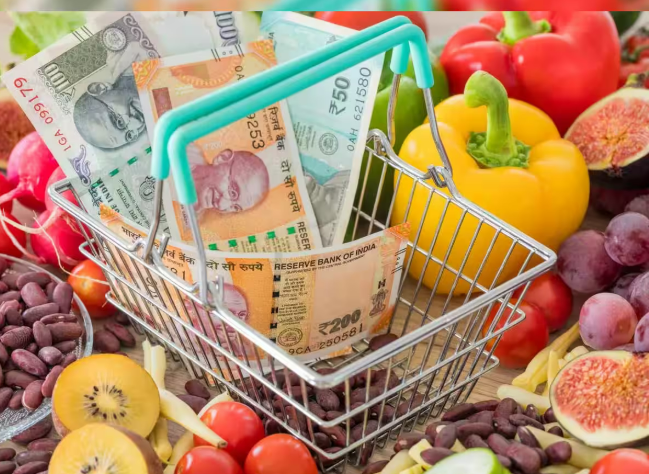
Rising Grocery Prices Put Pressure on Indian Household Budgets as Food Inflation Accelerates

India’s household budgets are coming under renewed pressure as rising prices of everyday groceries, vegetables, cooking ingredients and packaged food begin to squeeze consumers’ monthly spending. The latest inflation data shows that the pressure is particularly visible in the food basket. According to the Ministry of Statistics and Programme Implementation (MoSPI), India’s retail inflation rose to 4.45% in July 2026, up from 4.38% in June, while food inflation increased to 5.52%. Food inflation was even higher in rural India at 5.79%, compared with 5.05% in urban areas.
The numbers are significant because food is not a discretionary expense for most Indian households. Consumers may postpone buying a new phone, reduce entertainment spending or delay a major purchase, but groceries such as vegetables, cereals, pulses, edible oil, milk, spices and other kitchen essentials have to be purchased regularly. As prices rise, families are therefore being forced to make adjustments elsewhere in their budgets.
One of the most visible signs of this pressure is the changing price of vegetables and kitchen staples. Recent reports have highlighted sharp increases in items such as coriander, ginger and garlic, with heavy rainfall disrupting supplies and affecting market arrivals. Rice and sugar have also started adding pressure to the food basket. For households that purchase fresh vegetables frequently, even relatively small increases across several items can translate into a noticeably larger monthly grocery bill.
The impact is not limited to fresh produce. Rising input costs are also affecting packaged and ready-to-eat foods. Manufacturers are facing higher costs for ingredients, packaging and other inputs, making it difficult for them to reduce retail prices even when demand becomes weaker. As a result, consumers can face a combination of higher prices and smaller quantities.
This phenomenon is particularly important for middle-income families. When grocery expenses increase faster than household income, families often have to redistribute their monthly budgets. A household that previously allocated a fixed amount to groceries may now have to spend more to purchase approximately the same basket of products. The additional spending can come at the expense of savings, education, healthcare, travel, entertainment or investments.
For lower-income households, the impact can be even more severe because food represents a larger share of total household expenditure. Rural consumers are currently experiencing higher headline and food inflation than urban consumers, according to the latest official CPI figures. This means households with limited disposable income may have fewer options to absorb higher prices.
Consumers are consequently changing purchasing behaviour. Families may shift from premium brands to cheaper alternatives, purchase smaller quantities, compare prices across shops and online platforms, reduce food wastage and substitute expensive ingredients with more affordable ones. Some households may also buy staples in bulk when prices are favourable, while others may reduce the frequency of purchasing products that have experienced significant price increases.
The pressure is also extending beyond the grocery aisle. Higher food and input costs can eventually affect restaurants, food-delivery businesses, catering services, packaged-food manufacturers and small retailers. When businesses face higher procurement, transportation, electricity, packaging or labour costs, they may eventually pass some of those expenses on to consumers.
Fuel prices are another important factor because food prices are closely connected to transportation and logistics. India relies on an extensive network of trucks and other vehicles to move agricultural produce from farms and wholesale markets to cities and retail outlets. When energy and transportation costs increase, they can add another layer of expense to the final price paid by consumers. The Reserve Bank of India has also been monitoring the possibility that higher oil and input costs could make inflation more broad-based.
The current situation illustrates why headline inflation does not always perfectly describe how consumers feel about the cost of living. India’s overall CPI inflation of 4.45% remains within the RBI’s 2–6% tolerance band, but food inflation at 5.52% means consumers who spend a substantial portion of their income on groceries can experience a stronger increase in their personal cost of living than the headline figure suggests.
There is also a risk that temporary food-price increases could become more persistent if supply-side problems continue. Weather conditions play a particularly important role in India’s agricultural economy. Excessive rainfall, uneven monsoons, crop damage, transportation disruptions and lower market arrivals can quickly affect vegetable prices. When supplies decline while demand remains relatively stable, retail prices can rise rapidly.
The effect is often most noticeable in products that have short shelf lives. Vegetables such as coriander, tomatoes and leafy greens can experience substantial price fluctuations because they are highly sensitive to weather, transportation and local supply conditions. A household may therefore see significant differences in its weekly grocery bill even when broader annual inflation appears relatively moderate.
For businesses, the changing consumer environment presents its own challenge. Companies selling food, household products and consumer goods must balance higher production costs against increasingly price-sensitive customers. Raising prices can protect margins but may reduce demand. Keeping prices unchanged can preserve market share but squeeze profitability. Some companies may respond through smaller package sizes, revised product formulations, promotional offers or more affordable product variants.
For consumers, however, the underlying issue remains purchasing power. Inflation does not necessarily mean that everything becomes dramatically more expensive at once. Instead, a gradual increase across dozens of frequently purchased items can quietly reduce the amount of money available for other needs. A few extra rupees on cooking oil, vegetables, milk, spices, snacks and household products can become a significant additional expense when multiplied across an entire month.
The latest inflation figures therefore offer an important reminder that India’s economic progress needs to be considered alongside household affordability. While overall inflation remains manageable from a macroeconomic perspective, persistent food-price pressures can have a direct effect on consumer confidence, savings and spending patterns. The RBI has already signalled caution over the possibility of inflation becoming broader if food, fuel and input-cost pressures intensify.
Looking ahead, the direction of grocery prices will depend heavily on agricultural supplies, weather conditions, commodity prices, energy costs and the ability of supply chains to move food efficiently from producers to consumers. If food supply improves and weather-related disruptions ease, some of the current pressure could moderate. However, continued increases in essential food and household products would make it increasingly difficult for families to maintain their existing spending patterns without cutting back elsewhere.
For millions of Indian consumers, inflation is therefore not simply an economic statistic released every month. It is reflected in the grocery bill, the amount left in the bank account at the end of the month and the difficult choices families make between daily necessities and longer-term financial goals. As grocery prices remain under close watch, the biggest question for households is not just whether inflation is rising or falling, but whether their incomes are rising quickly enough to keep pace with the real cost of everyday life.

Comments are closed.